Posts

AFRICA, MIDWAY THROUGH ITS "GLORIOUS THIRTY"

Image
Africa, midway through its "Glorious Thirty" 17 Aug 2015   by   Abdoulaye Mar Dieye, Assistant Administrator and Director, Regional Bureau for Africa 2 Africa's economic prospects are bright, but the continent loses about 4 percent of its GDP each year due to the exclusion of women from business and politics. Photo: Aziza Bangwene/UNDP in DRC Sub-Saharan Africa is the only place in the world where living standards stagnated and even declined throughout the 1980s and 1990s. But things are now very different. Africa’s prospects began to change radically in the late 1990s, and its growth rate has remained close to five percent per year ever since. Africa has made concomitant gains in the social sphere. It has made
UNDP implements empowerment programme for persons with disabilities | UNDP in Nigeria

UNDP implements empowerment programme for persons with disabilities | UNDP in Nigeria

FLOODING IN THE RURAL AREAS: WHOSE FAULT

Image
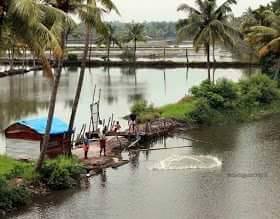
Flooding according to +thefreedictionary can be defined as an overflowing of water onto land that is normally dry.  Flooding is extremely dangerous and has the potential to wipe away an entire city, coastline or area, and can cause extensive damage to life and property. It also has great erosive power and can be extremely destructive, even if it is a foot high .http://eschooltoday.com/natural-disasters/floods/what-is-a-flood.html Flooding and wet weather are so costly to agricultural land because they cause delays in and reduction of crop harvest. http://www.ambiental.co.uk/detrimental-impact-of-floods-on-farming-and-rural-areas/  While the rural areas can be badly affected by flooding, the question still remains - whose fault is it about the constant flooding experienced in the rural areas; the topography of the lands in the rural areas which includes their boundaries, physio-graphic features, water features, landmarks etc or the total lifestyle of the rura...

LOCAL MINING AND THE ENVIRONMENT

Image
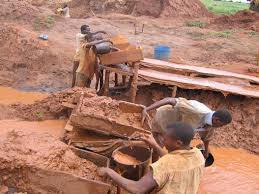
The enormous task of fighting poverty and earning a source of livelihood has driven many rural dwellers into local mining.   The process of local mining is one whereby precious stones and other mineral deposits are brought/dugged out by untrained rural dwellers.   This method of mining does not take cognisance of all the safety measures that are needed to be in place for such vocation and also does not recognise the negative environmental hazards that this will cause the rural populace. Although this industry has the potential of reducing poverty through income and employment generation, the use of primitive methods of mining constantly contributes its toll to the degradation of our environment. http://www.ajol.info/index.php/jorind/article/view/42333 Regrettably, while the government spends lots of money on importing these precious stones and mineral deposits, lots of these rural dwellers can be trained and equipped in harnessing this profession as they have chosen it ...

BRINGING HOPE TO THE RURAL PEOPLE

Image
The rural people have the largest percentage of idle youths without job, untrained in any formal learning, without skill and the greatest problem is that they do not see HOPE in any thing.  This negative mindset makes them believe that CHANGE is unattainable.  Here, at The Rural People, we go from creek to creek, village to village and community to community influencing their mindset by sensitizing and motivating them to use their resources in bringing sustainable development.   Initiating developmental efforts from one rural community to another is done in the form of giving learning/educational aids, introduction and training in skill acquisition programmes/farming tools, economic empowerment and others. We invite you to be part of our activities/projects so that together we can all make an ATTEMPT in bringing sustainable development in the rural areas by volunteering or becoming a donor in any of our projects that you have concerns for.  Visit our blog ...

Ending extreme poverty in fragile contexts - Getting to Zero: A USAID discussion series

Ending extreme poverty in fragile contexts - Getting to Zero: A USAID discussion series http://www.usaid.gov/endextremepoverty/fragile-contexts  Over the past 20 years, there has been encouraging progress towards the goal of ending extreme poverty, with nearly 700 million people rising above $1.25 a day since 1990.1 This impressive progress has made it conceivable for the world to eradicate extreme poverty by 2030. To do so, we need to support legitimate, effective governing institutions and promote robust and inclusive economic growth, * but fragile states, † in particular, face difficult hurdles. Poor and undemocratic governance, weak and corrupt institutions, and entrenched power dynamics all contribute to extreme poverty. Support for country transitions out of fragility, therefore, is a key element for accelerating and sustaining broad-based growth and reducing poverty. Most of the gains in extreme poverty reduction over the past two decades have taken place in highe...

What have the Millennium Development Goals achieved?

Image
The UN has called the MDGs ‘the most successful anti-poverty movement in history,’ but what progress has been made on each of the goals? The millennium development goals have targeted eight key areas – poverty, education, gender equality, child mortality, maternal health, disease, the environment and global partnership. Each goal is supported by 21 specific targets and more than 60 indicators. Below, we’ve looked at what has been achieved on some of the targets within each goal.   MDG 1   MDG 1: The number of people living on less than $1.25 a day has been reduced from 1.9 billion in 1990 to 836 million in 2015, although the target of halving the proportion of people suffering from hunger was narrowly missed.   MDG 2   MDG 2: Primary school enrolment figures have shown an impressive rise, but the goal of achieving universal primary education has just been missed, with the net enrolment rate increasing from 83% in 2000 to 91...